
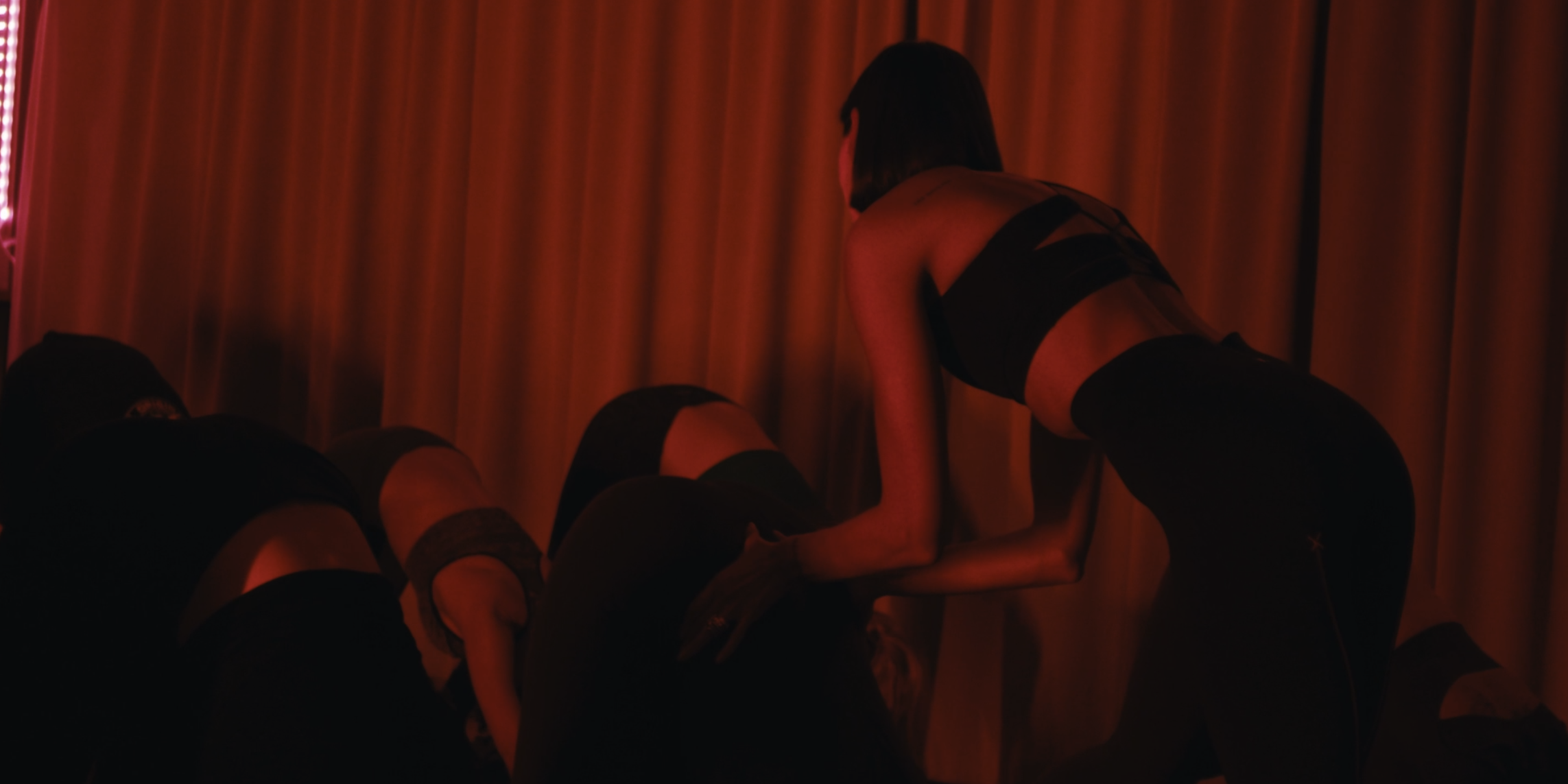
You stretch and still feel tense? Here's why.
You feel tense – but you train regularly? Then you might be moving in the wrong direction.
Because what your body really needs is not more intensity – but more space.
Fascia: the tissue that holds everything and often keeps everything in place
Fascia is not simply connective tissue. It is a highly sensitive network of collagen fibers that permeates your entire body – from the skin to deep within the organs. It provides structure, transmits tension, and stores every movement, every strain, and every form of stress.
According to the Fascia Research Project at the University of Ulm (2022), fasciae react not only mechanically but also neurophysiologically, meaning they communicate with your nervous system. They tense up when you are stressed. They retract when you don't move enough. And they lose their elasticity when you are constantly functioning but never relax.
The result: You feel inflexible, even though you are strong. You have tension, even though you are stretching. You are awake internally – but physically blocked.
What your nervous system really needs
According to a 2020 study from Harvard Medical School , slow, controlled stretching directly affects the parasympathetic nervous system – the system responsible for regeneration, rest, and stress reduction. This means that targeted stretching, rather than excessively strenuous exercise, activates biological processes that relieve stress on the body more efficiently.
At the same time, the cortisol level demonstrably decreases, and with it the tension level in the entire tissue.
Stretching is not a warm-up – it's targeted relief.
Most people stretch to become more flexible. But long-term flexibility is only maintained by regularly releasing tension. Fascial tissue, in particular, doesn't respond to force, but to time and pressure.
Long-held positions, controlled transitions, calm breathing: This isn't esotericism. This is biomechanics. And the most effective way to keep your system flexible and efficient.
Most of us stretch to become more flexible. But what if it's about something deeper? About what's become lodged between the neck and the nervous system?
Fasciae need one thing above all: time. No tearing. No irritation. But slow, rhythmic movement. And a place where they can let go.
DTWW Yoga Mat – for bodies that don't need commands
Our DTWW yoga mat ("Discover The World Within") is not just a training tool. It is your safe space.
For slow movements. For intuitive stretching. For evenings when you don't want to perform, but simply breathe.
Soft, skin-friendly, non-slip and deliberately minimalist – so that you don't absorb even more stimuli, but finally less.
It's not about making you better – but about efficiently relieving the strain on your body.
And sometimes that starts with a stretch that you hold long enough for your system to switch gears.


Leave a comment
This site is protected by hCaptcha and the hCaptcha Privacy Policy and Terms of Service apply.